
Leadership
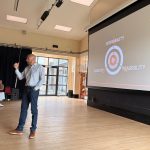
As we reflect on a year of change under a new government, Steven Morales’ closing keynote at the Red Kite Learning Trust conference provided a sobering yet inspiring view of where we are and where we must go. His words resonated with me as a leader working at the intersection of education and technology, particularly as we guide trusts on digital transformation journeys rooted in sustainability, innovation and impact.
Steven rightly noted that while there was hope for a renewed focus on education, it has not materialised with the clarity or urgency many anticipated. The sentiment of “structure agnostic” reform has led to uncertainty – about the future of academisation, the role of trusts, and the broader system architecture. Yet amidst this ambiguity, operational strength has never been more vital. This is not a time for passivity. It is a time to build from the inside out.
From Efficiency to Capacity Gains
A central message was clear: we must shift our mindset from efficiency savings to capacity gains. Rather than viewing resourcing through the lens of cuts or containment, we need to create space – for learning, for leadership, for innovation. Technology, particularly AI and automation, can be powerful levers here.
As Steven observed, AI is coming at us like a freight train. It is no longer a theoretical discussion. From data analysis to workflow automation, the tools are ready. The question is: are we? Our work with trusts reveals enormous potential in reimagining tasks that are repeatable and predictable. These are ripe for automation – freeing up precious human energy to focus on relationships, creativity and strategy. But this only works when there is digital confidence and leadership at the heart of the organisation.
Digital Leadership is Organisational Leadership
This is not a bolt-on. Digital capability is now integral to how we lead. Steven’s concept of “joined-up leadership” – where pedagogy, business and governance cohere around a shared mission – reflects the very heart of digital transformation. You cannot improve curriculum or outcomes without thinking about timetabling, systems, data, infrastructure and resource. Digital leadership is not the responsibility of the IT lead. It belongs at the strategic core.
Too often, however, we see operational leadership undervalued or isolated. Steven highlighted that nearly 50% of school business leaders do not receive an annual performance conversation. This is unacceptable. If we are serious about transforming education, we must invest in people, not just platforms. Culture and capability are the true enablers of change.
Reimagining the Operating Model
The ISBL’s operational excellence framework offers a structured, evidence-based approach to doing just that. Its domains – from process design to data performance, quality assurance, and continuous improvement – provide a roadmap for trusts to become not just well-run, but future-ready. The analogy to Team GB’s Olympic transformation was a powerful one. Marginal gains in kit, nutrition and mindset translated into global success. We must apply the same ambition to our school systems.
At TransforMATive, we are already seeing the benefits of this thinking in our partnerships. Whether it’s automating admissions pipelines, aligning financial planning tools, or developing trust-wide AI strategies, the most successful organisations are those that think holistically, act strategically, and empower every leader to lead.
Conclusion: A Call to Collective Courage
Steven reminded us that operational leadership is not separate from educational excellence – it enables it. And it’s time we treated it with the same rigour and respect. In a political landscape that remains uncertain, our best bet is to build strong from within.
Digital transformation is not about shiny tech. It’s about smarter ways of working. It’s about freeing time for the things that matter. It’s about resilience in the face of complexity. And most of all, it’s about leadership – connected, confident and capable.
We may not control policy. But we do control our ambition.