
Redefining Digital Leadership through Civic Connection and Collective Action

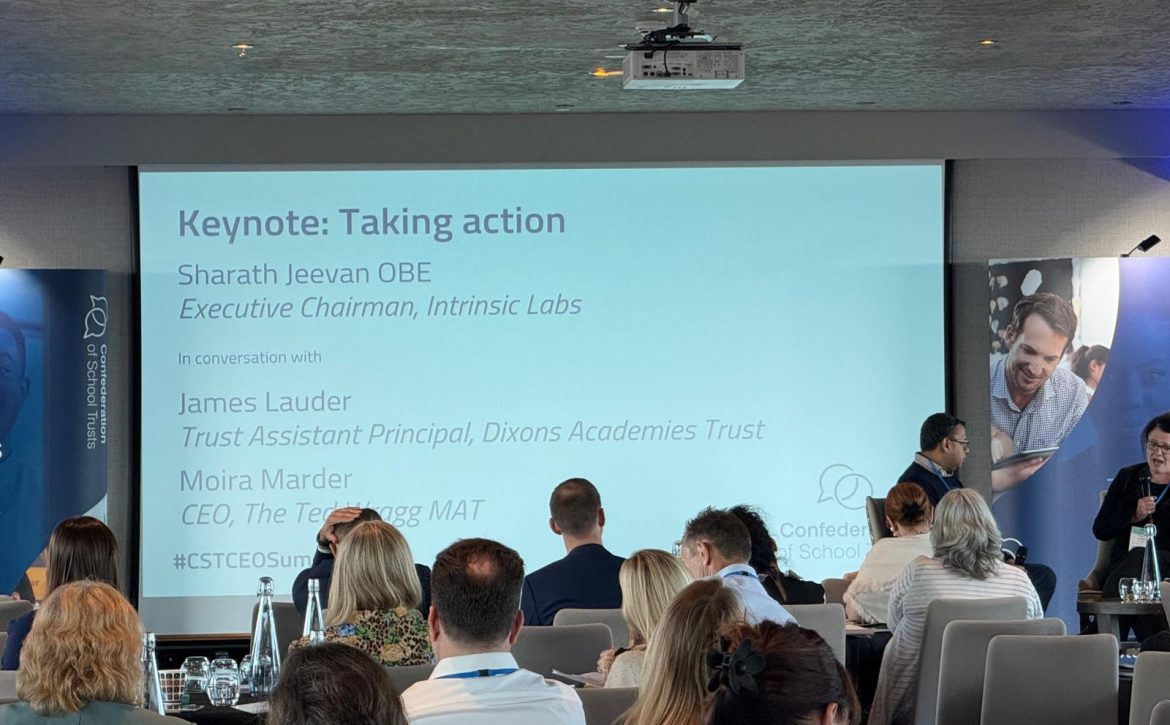
Listening to this week’s panel discussion between Moira, Jim and colleagues, I found myself deeply encouraged by the clarity, honesty and courage shown in their reflections on trust leadership. Their stories, shaped by inflection points like the pandemic, painted a picture of a sector that is beginning to embrace its civic responsibility in a much broader, bolder way.

As someone focused on digital transformation and AI in education, I was struck by how closely their narratives align with our own journey. At TransforMATive, we talk a lot about systems, strategy and infrastructure. But behind every tool and dashboard is a community. And what this panel reminded me is that digital leadership is civic leadership.

From Isolation to Interconnection

What stood out most was the deliberate shift from internal priorities to outward-facing purpose. Whether it was dealing with reputational challenges, expanding across regions, or responding to poverty and attendance issues, every trust leader on that stage acknowledged that the turning point came when they stopped doing to communities and started working with them.

This applies directly to how we think about digital strategy. A central server may connect your schools, but what connects your communities? Are your systems designed only to solve problems inside the school gate, or to enable collaboration and support beyond it?

The most successful digital strategies I have seen are those that start with empathy. Just as the trusts in this panel listened to parents, residents and young people, our digital leaders must listen to users. Staff. Pupils. Families. Technology must not widen the gap between institutions and people. It must close it.

AI: A Tool for Upstream Thinking

Jim’s reflections on tackling attendance through employment support rather than punitive measures spoke volumes. It reminded me of the concept of upstream thinking in digital transformation. Too often, schools are reacting to data, rather than designing systems that prevent the problem in the first place.

AI gives us a powerful opportunity to intervene earlier, smarter and more humanely. From predictive analytics around attendance, to early identification of safeguarding patterns, to AI-driven personalisation of learning support, we now have the tools to shift from firefighting to foresight.

But this requires a reimagining of leadership. As Moira said, we cannot simply run brilliant schools in isolation. We must create the conditions for excellence by connecting people, understanding contexts and using data to empower rather than punish.

Trust, Transparency and Technology

A running theme throughout the panel was the rebuilding of trust. Several leaders shared how their communities had, at one point, felt disconnected or misunderstood. The repair came through listening, transparency and place-based action.

In the digital world, this could not be more relevant. If we are not transparent about what AI is doing, if we cannot explain why certain tools are used, or if parents do not feel their children’s data is being protected, we will lose public trust quickly.

Digital leadership, therefore, is not just about performance. It is about permission. And the only way to earn permission is through open, inclusive dialogue and clear ethical governance.

From Central Office to Civic Square

What excites me most is how trusts are evolving. As the panel noted, we are no longer just providers of education. We are civic institutions, often the last remaining anchor in fragmented local systems. Whether it is food parcels, uniform grants, employment support or green space regeneration, our schools are becoming hubs of social renewal.

At TransforMATive, we are beginning to see the digital equivalent of this. Trusts are asking not just for IT strategies, but for digital blueprints that empower community voice, support civic partnerships and enable joined-up services across local areas.

We need digital systems that reflect local identities, not impose generic solutions. We need place-based platforms that can flex around the needs of different schools and regions. We need AI that learns from the community, not just about it.

Courage to Lead, Capacity to Act

The final message from the panel was about courage. About expanding the mandate of a trust and not waiting for permission to do the right thing. This struck a chord with me, because digital transformation also takes courage. It means challenging old models, confronting discomfort with new technologies and stepping into unfamiliar territory.

As we support trusts in building AI strategies, adopting new systems or overhauling infrastructure, we are constantly reminded that digital maturity is not just a matter of tech readiness. It is a matter of leadership. Of alignment. Of purpose.

Conclusion: A Call to Reimagine

To paraphrase a final reflection from the panel, if not us, who? If not now, when?

We stand at a pivotal moment for education. The question is no longer whether digital transformation will shape our future. It already is. The real question is whether we will shape it in service of our mission.

Let us lead with purpose. Let us design systems that listen, not dictate. Let us use AI not as a shortcut, but as a tool for understanding and justice.

And most of all, let us remember that behind every strategy is a child, a family, a teacher. If our digital systems do not serve them, they serve no one.

Civic Leadership in a Digital Age: Reflections on Purpose, People and the Power of AI

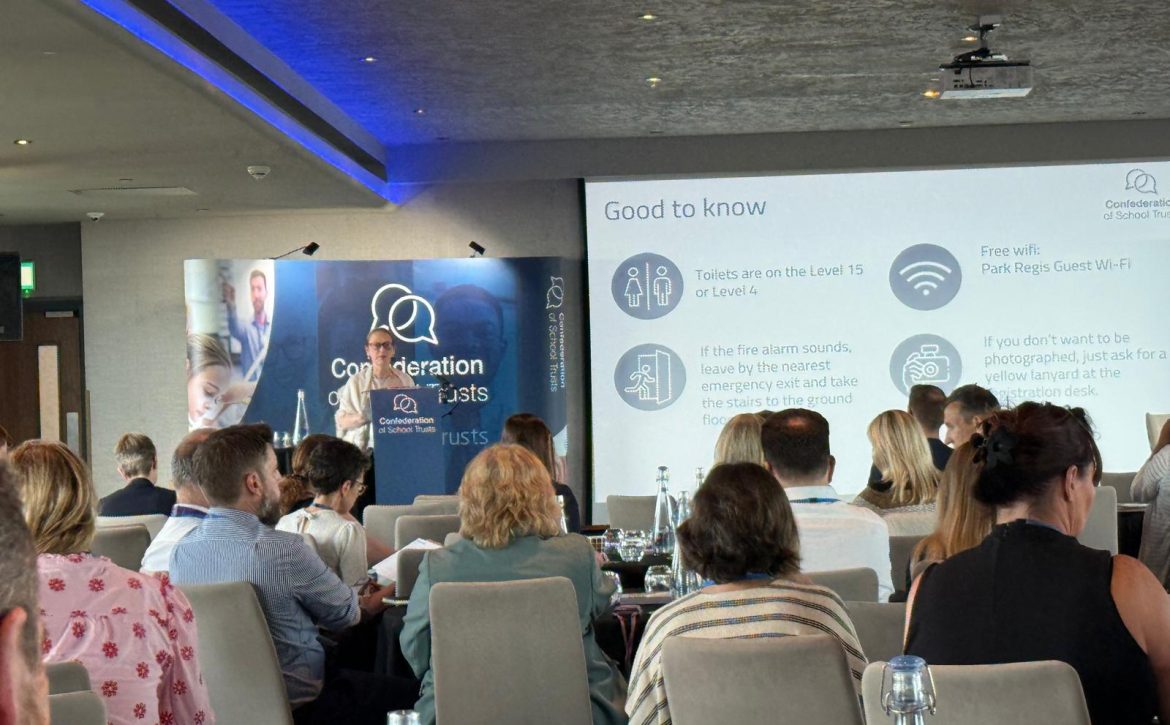
Last week, I had the privilege of listening to a powerful keynote from Leora Cruddas of CST. Her call to reimagine civic leadership not simply as collaboration between institutions, but as a deeper, more meaningful relationship with people and communities, could not have come at a more important time for those of us working in digital transformation within education.

As Leora pointed out, the challenges we face are too complex for individuals or single organisations to tackle in isolation. In today’s environment, which includes rising inequality, economic pressure and a fast-changing technological landscape, we need leadership that is rooted in purpose and grounded in community. Within education, that means reconsidering how we lead in a world increasingly shaped by artificial intelligence and digital systems.

Leadership That Centres People

Digital transformation is still too often seen as a technical project. It is measured in the number of devices, the speed of the internet connection or the efficiency of a helpdesk. But true transformation is about people. It is about how we live our values through the systems we design, and how we use digital infrastructure to serve our communities.

Leora reminded us that schools are microcosms of society. This could not be more true when we consider how technology is used. The systems we choose, the platforms we adopt, the tools we train staff to use, and the way we protect and use data all shape the experience and opportunity of pupils and staff alike. Digital leadership is not a technical function. It is a moral one.

Accountability and Trust in a Digital World

A core theme of Leora’s address was the need to rethink accountability. She acknowledged that the government has a legitimate role in setting the accountability framework, particularly given the level of public investment in education. However, she challenged us to go further.

We need to see accountability not as something done to us, but something we own. We must move beyond what is externally imposed and take responsibility for being transparent and intentional about what we value and how we measure success.

This is particularly true when it comes to digital strategy and AI. Are we using data to evidence compliance, or to improve the lived experience of children and families? Are we chasing metrics that are easy to capture, or investing in systems that reflect our values? Trusts must be clear about their vision for digital and their expectations for how technology will support teaching, learning and organisational effectiveness.

Collaboration Through Autonomy and Interdependence

One of the most compelling ideas in Leora’s speech was the balance between autonomy and interdependence. School trusts have significant freedom, but working in isolation can limit impact. In a connected digital world, the best outcomes come when we work together.

This is something we see clearly through our work at TransforMATive. Whether it is co-designing digital strategies, facilitating shared procurement, or building trust-wide AI policies, collaboration multiplies the impact of individual effort. Internal ownership, supported by sector-wide cooperation, creates a climate where innovation can thrive.

AI as a Leadership Test

Leora introduced a speaker known for helping leaders navigate “inflection points”. There is no doubt that AI represents such a moment. It is changing how we think about learning, teaching, administration and leadership itself.

But speed must not come at the expense of reflection. The education sector must respond to AI with maturity and clarity. That means building governance around its use, upskilling staff, ensuring equitable access, and grounding every AI tool in a clear purpose.

At TransforMATive, we are supporting trusts to craft thoughtful, robust AI strategies. These are not just about tools or productivity. They are about inclusion, agency, trust, and impact. The launch of a national AI policy, combined with the work of pioneering schools and trusts, will shape the future of education in profound ways. We must ensure that digital leadership keeps pace with this change.

Final Reflections: Purpose, People and Platforms

Leora’s keynote returned again and again to the theme of purpose. It is a useful reminder. Digital change is not about systems alone. It is about who we are and what we stand for.

If we can bring the same values-led approach to digital strategy as we do to curriculum or safeguarding, then the future of education will be both digitally enabled and deeply human. Let us lead with purpose, measure what matters, and take this moment seriously.

We are building more than systems. We are building a better future.

Why AI Literacy Must Be Central to Modern Education

At TransforMATive, we believe that AI literacy isn’t a future aspiration, it’s a present necessity. As multi-academy trusts navigate the complexities of digital transformation, equipping staff and pupils with the skills to understand and engage with artificial intelligence is fast becoming essential. We support MATs to move beyond simply adopting AI tools, helping them embed AI literacy into their curriculum, CPD programmes, and strategic planning, ensuring their communities are confident, informed, and ready to lead in an AI-driven world.

Rethinking teaching and learning in the age of artificial intelligence

Artificial intelligence (AI) is no longer a distant concept, it’s already embedded in classrooms, shaping the curriculum, and redefining what it means to be digitally literate. But as AI capabilities continue to evolve, we must ask: are we equipping learners, and educators, not just to use AI, but to understand and critically engage with it?

A compelling new paper by Kong and colleagues sets out a clear case: AI literacy should be a fundamental component of contemporary education; not just for pupils, but for teachers, school leaders, and those shaping strategy across the system.

What Do We Mean by AI Literacy—And Why Is It So Important?

AI literacy goes far beyond knowing how to use tools like ChatGPT. It’s about developing a mindset. A blend of knowledge, skills, and ethical awareness that allows people to use AI responsibly, creatively, and with confidence.

According to Kong et al., AI literacy must sit alongside digital and media literacy in the curriculum. Not everyone needs to be a computer scientist, but every learner should be able to:

  • Understand what AI is and where it shows up in everyday life
  • Question its impact on fairness, bias, and inclusion
  • Use AI tools to solve real-world problems and support innovation

A Force for Inclusion and Lifelong Learning

AI has the potential to personalise learning in powerful ways tailoring support, pace, and content to individual needs. But unless we teach AI literacy alongside this, we risk deepening existing inequalities.

Kong and colleagues advocate for equity-informed AI education ensuring all pupils have access to the knowledge and tools to thrive in an AI-driven world, not just the digitally advantaged.

Done well, this isn’t just about skills for today, it’s about preparing young people for a lifetime of learning and work in an AI-enhanced society.

What Can We Do in Schools and Trusts?

The message from Kong et al. is clear: AI is already reshaping the world around us. Education can either keep pace or risk being left behind. By prioritising AI literacy, we empower pupils to not only navigate an AI-rich world—but to shape it.

The question isn’t should we teach AI literacy? it’s how soon can we embed it meaningfully into teaching and learning?

https://doi.org/10.1080/14703297.2024.2332744

Certainly! Here’s a UK English closing paragraph with a professional and encouraging call to action:


As the role of AI in education continues to grow, now is the time to ensure your trust is not just keeping up, but leading the way. Whether you’re looking to develop a trust-wide approach to AI literacy, up-skill your workforce, or embed AI into your strategic vision, TransforMATive is here to help. If you’d like to explore how we can support your journey, please don’t hesitate to get in touch, we’d love to connect.

Impact of AI on the Cyber Threat – Now to 2027

AI Is Redrawing the Cyber-Threat Map – Highlights from the NCSC’s 2025 Assessment

The UK’s National Cyber Security Centre (NCSC) has released “Impact of AI on the Cyber Threat: Now to 2027.” It focuses on the next two years and warns that artificial intelligence is already tipping the scales toward attackers. Organisations that fail to adapt will slip into a widening resilience gap.


Why this report deserves your immediate attention

  • Near-term, not sci-fi. The assessment stops at 2027, so its advice is usable right now rather than in some distant future.
  • 360° evidence base. Findings blend incident telemetry, government intelligence and observable AI tooling trends, giving it more weight than a single-source study.
  • Early-warning. NCSC sits at the nexus of national-security and critical-infrastructure defence; its signals often show up in commercial SOC logs months later.

Five hard truths every security leader must absorb

  1. AI drops the “skill floor.” Generative phishing kits, deep-fake services and automated recon make it easy for amateur hackers to run polished campaigns. Expect both the volume and believability of commodity attacks to jump.
  2. Ransomware still rules. Criminal crews are using large-language models to profile victims, craft extortion emails and even automate negotiation scripts, speeding up their entire playbook.
  3. Patch windows are collapsing. AI-assisted vulnerability research is shrinking the time between CVE disclosure and exploitation and is likely to fuel more zero-days before 2027. Monthly patch cycles will soon be untenable.
  4. A “digital divide” is opening. Organisations that cannot weave AI into defence will see resilience gaps widen across supply chains and critical infrastructure—concentrating cyber risk in the least-resourced sectors.
  5. Incidents are already surging. The NCSC received almost 2 000 attack reports in 2024, and the most severe cases tripled year-on-year—a spike it directly links to adversarial AI adoption. Boards should treat AI-fuelled threat growth as a present, not future, risk driver.

From insight to action: a 24-month roadmap

  • Shift to “AI-first” defence. Pilot LLM-backed phishing filters, anomaly-based EDR and model-assisted log triage so analysts can focus on high-value investigation.
  • Harden the human layer. Replace dated awareness videos with simulations that use AI-generated lures, deep-fake voice snippets and realistic business-email-compromise scenarios. Rehearse no-ransom, rapid-restore playbooks before attackers force the issue.
  • Bake “secure-by-design” into every AI project. Enforce model-provenance checks, red-team testing and ML supply-chain controls; document prompts, data lineage and guard-rails for auditability.
  • Invest in talent or outsource. Consider the need for a security operations centre (SOC) to keep detection pipelines monitored and managed.
  • Share intel, don’t silo it. Feed anonymised indicators and TTPs into your sector and track obligations under the forthcoming Cyber Security & Resilience Bill for safe-harbour protection.

Join the conversation

If you would like to understand how your MAT could improve its knowledge and awareness of Cyber, improve risk management then register to join our next roundtable on June 18th in Birmingham https://forms.gle/T8JDEFz2mWn5ZzxC9

Why Invest in Technology Now?

As we approach the end of the budget-setting period, many schools across the country are navigating challenging financial decisions. The recent announcement of a 4% pay rise for teachers, supported by £615 million in additional funding, is a commendable step towards valuing our educators Schools Week.

However, with schools expected to cover a portion of this increase through internal efficiencies, it’s clear that strategic investments are more crucial than ever.

Why Invest in Technology Now?

  • Enhance Quality: Implementing advanced educational tools can elevate teaching and learning experiences.
  • Manage Risk: Robust IT systems can protect against data breaches and ensure compliance with regulations.
  • Reduce Costs: Automation and digital solutions can streamline administrative tasks, leading to significant savings.
  • Generate Revenue: Online courses and virtual learning platforms can open new income streams.

At Transformative, we specialise in guiding educational institutions through digital transformations that align with their unique goals and challenges.

Ready to Future-Proof Your School?

Let’s discuss how we can support your institution in leveraging technology for sustainable growth and excellence.

#Education #SchoolBudget #EdTech #DigitalTransformation #TransformativeSolutions

People First: Celebrating 3 Years of TransforMATive with Strategy, Skills, and a Bit of ‘The Cube’

As TransforMATive celebrates its third birthday, we’re taking a moment to reflect on what really drives our impact: our people. From the very beginning, our mission has been rooted not only in supporting digital transformation across education and the public sector, but in building a company where people feel valued, supported, and empowered to grow.

At the heart of our success is a simple but powerful belief—people matter most.

Whether we’re shaping AI strategy for a Multi-Academy Trust or delivering digital leadership roundtables, our work is only possible because of the passion, insight, and commitment of our team. That’s why we continue to invest in a people-centred strategy that prioritises talent recruitment, development, and—most importantly—retention.

To mark our milestone, we wanted to do something memorable. So, we invited our team to step into a very different kind of challenge: TransforMATive Takes on The Cube.

Why The Cube? Because, in many ways, it mirrors what we value as a business.

Success in The Cube isn’t just about individual ability—it’s about strategy, adaptability, teamwork, resilience, and yes, a bit of healthy competition. These are the same qualities that underpin our approach to transformation projects and client relationships. It was a chance to laugh, to connect, to support each other under pressure—and to reflect on how we apply those same principles every day in our work.

This experience reminded us that no strategy is effective without the right people to bring it to life. That’s why we’re focused on:

Attracting exceptional talent who share our values and ambition.

Fostering a culture of trust, collaboration, and continuous learning.

Creating space for wellbeing, creativity, and fun—because great work happens when people feel great.

As we enter our fourth year, we’re more committed than ever to making TransforMATive not just a place to work, but a place to thrive.

To everyone who has been part of this journey—thank you. Let’s keep building something brilliant, together.

Celebrating Change: The Impact of the TransforMATive Leadership Programme 2024–25


On Thursday 24th April 2025, Google HQ in London became the backdrop for a remarkable day of celebration, reflection, and forward-thinking collaboration, marking the culmination of the TransforMATive Leadership Programme 2024–25. With over 50 leaders from Multi-Academy Trusts in attendance, this milestone event brought together visionaries, data pioneers, digital strategists, and educators to showcase and share how digital transformation can be a catalyst for equity, efficiency, and educational excellence.

A Programme Rooted in Purpose

Chaired by Jonny Wathen, Lisa Hawker, and John Murphy, the programme has been more than professional development—it’s been a transformative journey of strategic leadership. Through immersive learning, peer collaboration, and deep dives into digital strategy, participants explored how technology can drive improvement across governance, finance, inclusion, and curriculum.

The programme’s structured approach was designed to tackle real sector challenges: from the digital divide to workload pressures, from sustainability concerns to data fragmentation. Sessions like “Developing and Implementing a Digital Strategy” and “Google AI Studio in Schools” provided not just inspiration but practical tools that MATs are already embedding into their strategies.

Showcasing System Leadership in Action

The event celebrated individuals and trusts leading from the front:

  • Andrew Harris and James Browning demonstrated how a strategic, values-led digital approach is embedding across entire trusts.
  • Andrew Walls showcased Google AI Studio’s potential—from teacher coaching to web accessibility, redefining automation in schools.
  • Mark Hancock revealed how River Learning Trust has unified fragmented data systems to enable real-time insights.
  • Cheryl Shirley and Fiona Law offered practical examples of how inclusive EdTech and accessible tools can empower staff and learners.

Award-winning moments, such as Dewan Chowdhury’s contributions to data visualisation using BigQuery, reminded us that innovation often comes from unexpected corners of our teams.

The Real Impact

Participant feedback paints a powerful picture:

“What I thought would be IT-focused became a transformative leadership journey.”
“The course has been brilliant and eye-opening… offering valuable insights and new perspectives.”
“It’s empowered us to rethink how we meet, collaborate, and prioritise what matters.”

More than CPD, the programme sparked strategic alignment across trusts—linking digital strategy directly to teaching, inclusion, finance, and culture.

A Shared Mission: Equity, Excellence, and Innovation

The concluding panel discussions and reflections underscored a key message: digital strategy is no longer a future consideration—it’s a current necessity. Whether improving governance, enabling staff wellbeing, or empowering pupil outcomes, technology is reshaping the educational landscape.

Thanks to Google for Education for hosting, and to every trust who shared openly, challenged norms, and collaborated with courage.

As one delegate put it, “This is system leadership in action—together, we’re raising the bar and closing the gap.”

AI in Education: Taking Your First (Or Next Steps)

Exceed Academies Trust, in partnership with TransforMATive, hosted our first AI in education conference on the 28th February 2025 at the University of Leeds. The conference was an opportunity for Exceed to share our AI journey and to help other schools and trusts start theirs or to take their next step on the journey. As an outward facing trust with a strong moral purpose to contribute to system wide improvements in education, we committed to not only sharing our journey but also publishing a wealth of resources and tools to support the wider sector.

The event held at the University of Leeds brought together educators, innovators, and system leaders from across the sector for an inspiring day of discovery, challenge, and opportunity.

TransforMATive believe that sharing what works—and what doesn’t—is critical. And this event did exactly that. We heard from schools at the very start of their journey and from those already embedding AI into daily practice with impact. There was a powerful sense of collective purpose: to better understand how artificial intelligence can support Multi-Academy Trusts (MATs) and transform education for staff and students alike.

The interactive nature of the event stood out. Attendees got hands-on with VR and AR headsets, explored new product demonstrations, and even had the chance to engage with neuroimaging technologies such as EEG—showcasing how deep cognitive insights could help personalise learning experiences.

With teacher workload at an all-time high, one of the central questions was: How can AI support those at the front line? Whether through intelligent automation, smarter lesson planning tools, or marking assistance, we saw examples of technology being used not to replace educators, but to amplify their impact and reclaim time for what matters most.

Our sponsors played a vital role in bringing this vision to life. They showcased cutting-edge tools and features, providing a tangible sense of what’s possible right now—and what’s just around the corner.

Above all, what made the day special was the willingness of participants to share, to challenge assumptions, and to reimagine what education could look like in an AI-augmented world.

We’re proud to be part of this movement—and even prouder to help connect the dots for MATs navigating this change. AI is not a distant future; it’s already reshaping how we think about teaching, learning, and leadership.

Let’s keep the conversation going.

Celebrating Innovation in Education: Wakefield’s School Leaders Conference

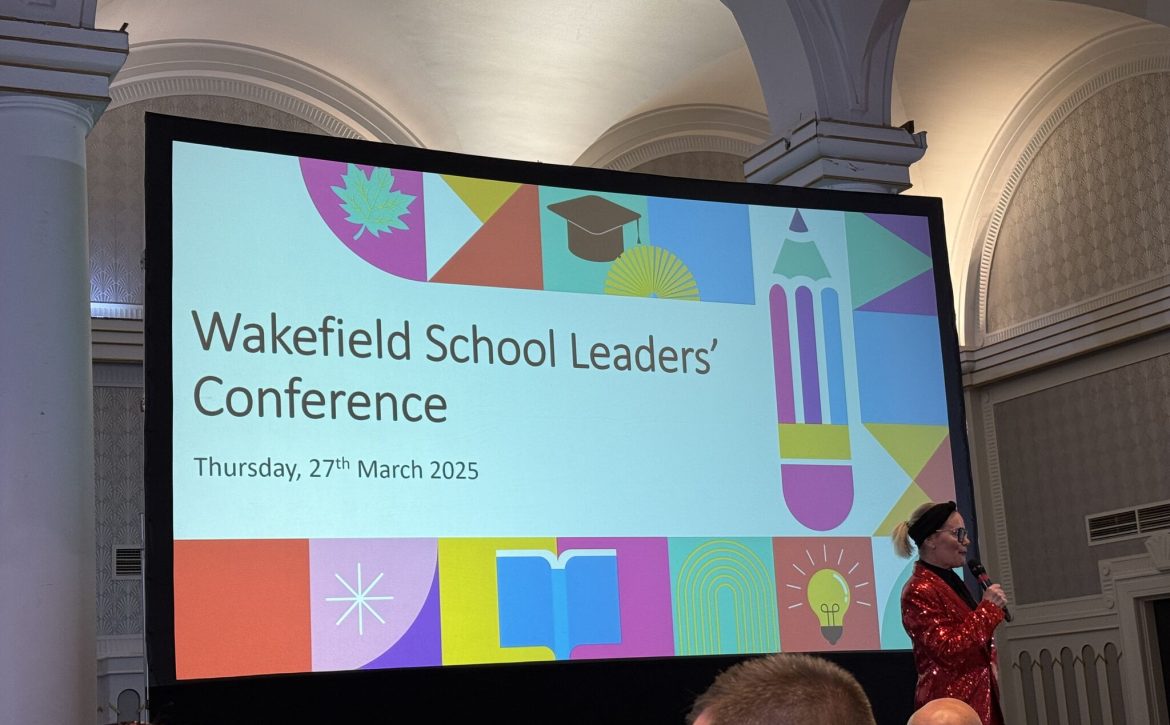
We’re still buzzing from the incredible School Leaders Conference hosted by Wakefield Education Services. A huge thank you to the brilliant Wakefield team for the kind invitation and warm welcome—it was a privilege to be part of such an inspiring and energising event.

The day brought together passionate educators, thought leaders, and change-makers all exploring the role of Artificial Intelligence in shaping the future of teaching and learning. From big-picture strategy to practical implementation, every session offered powerful insights and sparked rich conversations.

It was especially meaningful to work alongside our trusted TransforMATive Associate, the amazing Emma Darcy, whose keynote on AI in education struck the perfect balance between vision, pragmatism, and challenge. Her session left delegates feeling empowered and equipped to take their next steps.

A special shoutout goes to Pepe DiIasio for his Friday afternoon keynote—thought-provoking, energising, and a perfect way to close the conference on a high. His reflections reminded us of the importance of leadership, curiosity, and courage in times of change.

At TransforMATive, we know that navigating digital transformation in education—especially during financially and structurally challenging times—can be daunting. But events like this remind us that innovation thrives in community. When system leaders come together with openness, ambition, and shared purpose, great things happen.

If your organisation is exploring how to harness AI, build digital confidence, or develop a strategic transformation plan, we’d love to connect and support your journey.

Let’s keep the momentum going.