

Category: Leadership

Curiosity to Capability: Reflections on the Google Leaders Series

Earlier this month, I had the opportunity to attend the Google Leaders Series in London, a gathering of education leaders, digital strategists and sector partners focused on one urgent question: what does meaningful AI adoption in education actually look like?

This was not a product showcase or a tech demonstration. It was a timely, thoughtful and energising event that placed people, purpose and pedagogy at the heart of the digital transformation conversation.

From Possibility to Practice

The day opened with a keynote from Jos Dirkx, whose message was as powerful as it was timely. AI is not a future issue, it is a present one, and how we choose to think about it will define how we use it. Whether with a mindset of curiosity, creativity or service, she challenged us to see this moment not only as a technological shift but a deeply human one.

We heard from trusts including Cidari, LEO Academy and Tiffin Girls’ School, each of whom shared practical insights about their own journey with AI. From using Gemini to reduce administrative workload to embedding assistive tools for learners with SEND, the common theme was clear. AI has enormous potential, but only when it is aligned with real priorities and grounded in the realities of the classroom.

Leading With Purpose, Not Panic

Throughout the event, there was a strong focus on ethical leadership. Google’s reaffirmation of its position on data privacy and the UK Government’s guidance on the use of student work in generative AI models were welcome reminders of the responsibilities that sit alongside innovation.

As leaders, we must ensure our approach is governed by thoughtful questions. Are we embedding equity into our systems and decisions? Are we prioritising pedagogy over convenience? Are staff confident, equipped and engaged, or are they overwhelmed by complexity?

At TransforMATive, these are the same questions we explore during our AI workshops with trusts. It was reassuring to see this level of ethical scrutiny mirrored so strongly throughout the event.

From Inspiration to Implementation

The afternoon sessions brought those big ideas back to ground level. Practical workshops guided us through a five-step model for AI implementation, covering strategy development, stakeholder engagement, pilot planning and ongoing governance.

What This Means for Our Sector

At TransforMATive, we continue to champion the idea that AI should not replace human judgement. Instead, it should help reclaim time, reduce friction and enable educators to focus on what really matters. Relationships, creativity, and impact.

The Google Leaders Series was a powerful reminder that the conditions for effective digital change are already emerging. The tools are ready. The ideas are flowing. What matters now is leadership that can turn vision into momentum, and momentum into meaningful change.

For the trusts we support, events like this provide far more than inspiration. They serve as a springboard for action, offering clarity, credibility and confidence.

Final Reflections

As we look ahead to a new academic year, one thing is clear. AI in education is no longer a conversation about the future. It is a conversation for now. It requires maturity, humility and strategic intent.

To everyone involved in the Google Leaders Series, thank you for creating a space where education leaders could listen, reflect and lead with purpose. You have helped us all move from curiosity to capability.

Let us keep this energy going. Let us continue to share, collaborate and build the systems our children deserve.

The future is not something we wait for. It is something we shape, together.
From Pressure to Possibility: Financial Leadership and the Power of the Tribe

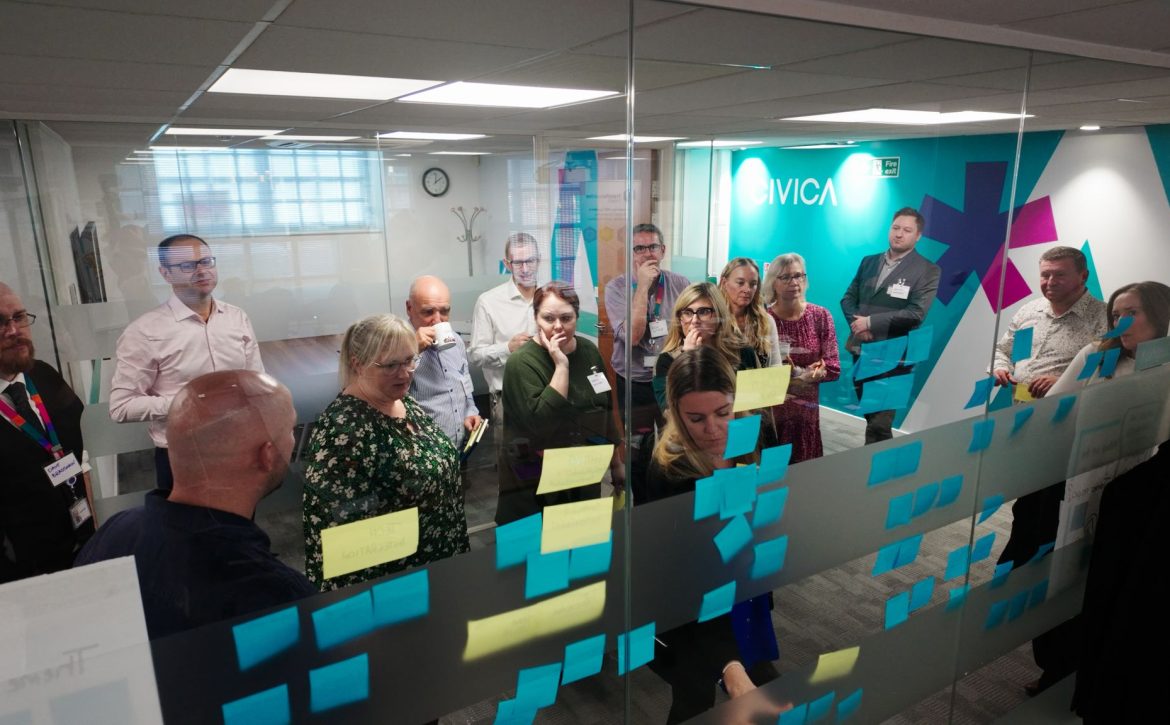
As this academic year draws to a close, I have been reflecting on one of its most meaningful developments: the formation of the TransforMATive Tribe. What began as a network of 14 MAT CFOs within reach of Leeds has grown into something far more powerful. It has become a movement rooted in collaboration, insight and shared purpose.

Together, we have faced significant financial pressures, uncertain pay settlements and the ongoing demands of a maturing system. Rather than weather these challenges in isolation, we came together to respond with clarity, confidence and community.

Shared Struggles, Shared Strength

It all started with a dinner table. Breaking bread with colleagues set the tone for what followed: honest conversation, mutual support, and the sharing of practical strategies. Throughout the year, our discussions have covered everything from automation and procurement to income generation and benchmarking.

What has stood out to me is not only the depth of expertise around the table, but the generosity with which it has been shared.

Recipes for Resilience

Our collective learning has now been captured in the CFO Playbook: Recipes for Financial Success. This practical guide shares real examples of action and impact across three core themes:

  • Operational Efficiency
  • Income Generation and Diversification
  • Effective Benchmarking

Whether it is Red Kite’s automation of procure-to-pay (saving 575 hours annually) or Australia MAT’s centralised finance model built on specialist roles, each recipe offers tested ideas for trusts to adapt and implement.

These strategies are not theoretical. They are grounded in real practice and designed to be useful across the sector.

Collaboration That Builds Capacity

One of the key messages that emerged throughout the year is that collaboration builds capacity. Melissa’s reflections from STAR MAT highlighted this beautifully. From procurement alignment to resource sharing and preparation for merger, her trust’s journey is a powerful reminder that meaningful change often begins with shared intent.

James’ leadership on finance benchmarking was equally impactful. His work moved beyond surface-level comparisons to deliver sector-led, detailed analysis of cost per pupil across finance processes. This approach helps trusts make evidence-informed decisions and understand the hidden costs of routine operations.

Taking Control in Uncertain Times

As Stuart McCluskey from Civica noted, many of our discussions were marked by a real sense of urgency. In some sessions, announcements about funding or pay awards were unfolding in real time. But rather than react passively, Tribe members responded with intention.

We heard examples of trusts generating income through gym memberships, wraparound childcare and selling services. These approaches are not just about resilience. They are about trusts taking greater control of their financial futures in order to invest in what matters most.

A Platform for What Comes Next

I am incredibly proud of what the Tribe has achieved this year. The CFO Playbook is a significant output, but the real success lies in the relationships built and the collective ambition it represents.

This model of peer-led collaboration is one we hope to build on, whether through future regional tribes or deeper exploration of key themes. We know that many trusts across the country face similar challenges, and we hope this resource is both relevant and helpful.

Final Reflections

If there is one thing this year has reinforced, it is that financial leadership in education is no longer just about managing risk. It is about creating opportunity. The most effective leaders are not only improving processes, they are strengthening culture and aligning resources to purpose.

To everyone who contributed to the Tribe, thank you. You have demonstrated that even in the most challenging conditions, possibility emerges when we choose to work together.

Let us keep building from here. Together.

Operational Excellence, Digital Ambition and the Reality of Reform

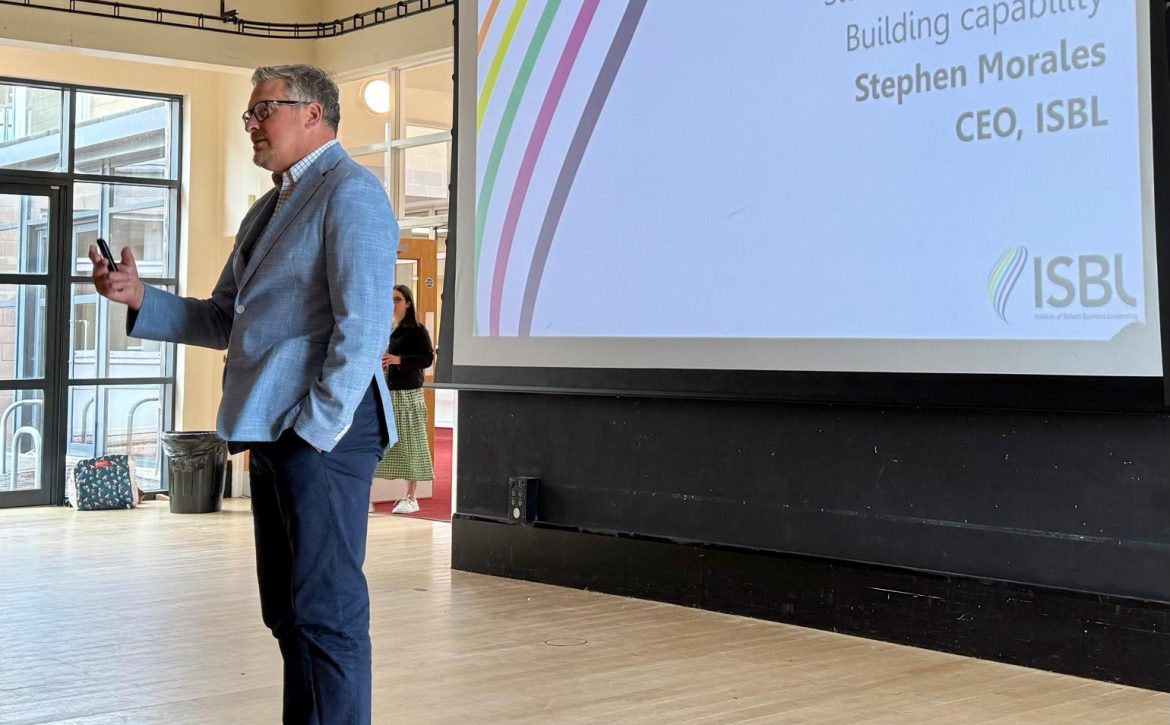
As we reflect on a year of change under a new government, Steven Morales’ closing keynote at the Red Kite Learning Trust conference provided a sobering yet inspiring view of where we are and where we must go. His words resonated with me as a leader working at the intersection of education and technology, particularly as we guide trusts on digital transformation journeys rooted in sustainability, innovation and impact.

Steven rightly noted that while there was hope for a renewed focus on education, it has not materialised with the clarity or urgency many anticipated. The sentiment of “structure agnostic” reform has led to uncertainty – about the future of academisation, the role of trusts, and the broader system architecture. Yet amidst this ambiguity, operational strength has never been more vital. This is not a time for passivity. It is a time to build from the inside out.

From Efficiency to Capacity Gains

A central message was clear: we must shift our mindset from efficiency savings to capacity gains. Rather than viewing resourcing through the lens of cuts or containment, we need to create space – for learning, for leadership, for innovation. Technology, particularly AI and automation, can be powerful levers here.

As Steven observed, AI is coming at us like a freight train. It is no longer a theoretical discussion. From data analysis to workflow automation, the tools are ready. The question is: are we? Our work with trusts reveals enormous potential in reimagining tasks that are repeatable and predictable. These are ripe for automation – freeing up precious human energy to focus on relationships, creativity and strategy. But this only works when there is digital confidence and leadership at the heart of the organisation.

Digital Leadership is Organisational Leadership

This is not a bolt-on. Digital capability is now integral to how we lead. Steven’s concept of “joined-up leadership” – where pedagogy, business and governance cohere around a shared mission – reflects the very heart of digital transformation. You cannot improve curriculum or outcomes without thinking about timetabling, systems, data, infrastructure and resource. Digital leadership is not the responsibility of the IT lead. It belongs at the strategic core.

Too often, however, we see operational leadership undervalued or isolated. Steven highlighted that nearly 50% of school business leaders do not receive an annual performance conversation. This is unacceptable. If we are serious about transforming education, we must invest in people, not just platforms. Culture and capability are the true enablers of change.

Reimagining the Operating Model

The ISBL’s operational excellence framework offers a structured, evidence-based approach to doing just that. Its domains – from process design to data performance, quality assurance, and continuous improvement – provide a roadmap for trusts to become not just well-run, but future-ready. The analogy to Team GB’s Olympic transformation was a powerful one. Marginal gains in kit, nutrition and mindset translated into global success. We must apply the same ambition to our school systems.

At TransforMATive, we are already seeing the benefits of this thinking in our partnerships. Whether it’s automating admissions pipelines, aligning financial planning tools, or developing trust-wide AI strategies, the most successful organisations are those that think holistically, act strategically, and empower every leader to lead.

Conclusion: A Call to Collective Courage

Steven reminded us that operational leadership is not separate from educational excellence – it enables it. And it’s time we treated it with the same rigour and respect. In a political landscape that remains uncertain, our best bet is to build strong from within.

Digital transformation is not about shiny tech. It’s about smarter ways of working. It’s about freeing time for the things that matter. It’s about resilience in the face of complexity. And most of all, it’s about leadership – connected, confident and capable.

We may not control policy. But we do control our ambition.

Startup to Scale-Up: What Education Can Learn from Innovation in Business

I had the privilege to attend and present at the Red Kite Learning Trust conference earlier this month. The conference focused on technology and operational excellence and I had the pleasure of hearing Mark share his remarkable journey from corporate boardrooms to craft beer startups and back again. It was full of sharp insights, hard lessons, and generous humour. And although Mark came from outside education, everything he said resonated deeply with the challenges we face in transforming our schools and trusts.

Innovation, after all, is not exclusive to products and profit. It is equally critical in public service and education, especially in an era where we are asked to deliver more with less, adapt to ever-changing demands, and scale solutions in complex environments. Mark’s message was clear: we need to develop dual capability – the systems to operate efficiently and the mindset to innovate boldly.

Education Needs Both Operating Systems

Mark made a key distinction between two kinds of operating models: the execution engine that delivers day-to-day operations and the venture engine that tests and scales new ideas. Most organisations, he noted, tend to have one or the other. Rarely both.

This is exactly the tension we see in schools and trusts. We are excellent at routine. We have compliance nailed. But when it comes to scaling innovation – whether it is adopting AI tools, rethinking MIS procurement, or designing cross-school digital infrastructure – many organisations get stuck.

To thrive, we must adopt what Mark called an “ambidextrous mindset” – where operational excellence and innovation coexist. In digital terms, this means building agile infrastructure and governance systems that allow us to test, learn and iterate without compromising on safeguarding, finance, or educational standards.

Focus: Know What You’re Brilliant At

One of Mark’s central themes was the power of focus. In a sea of demands, distractions and half-funded initiatives, organisations need to double down on their unique strengths. This lesson is vital for multi-academy trusts navigating digital strategy.

Too many digital programmes try to do everything: plug every gap, satisfy every voice, chase every metric. The trusts that succeed are those that focus on what they do exceptionally well – whether that is community engagement, teacher development, or data-led decision making – and build digital systems that amplify that strength.

Ask yourself: what is your trust’s digital superpower? What would other trusts look at and wish they had?

Originality: Redefining Constraints

Mark’s advent calendar anecdote was more than just clever marketing. It was a lesson in reframing constraints. Faced with a warehouse bottleneck in December, they created demand in November. The limitation led to innovation.

Schools face their own unmovable constraints: the school day, term dates, inspection cycles, budget limits. But what if we treated these not as roadblocks, but as design prompts? What if we asked: how might we innovate within (or even around) the structure of the school year?

In our work at TransforMATive, we see the best ideas emerge when teams are given permission to think differently. AI use in lesson planning, dynamic timetabling, shared procurement across trusts – these ideas often come from the margins, not the centre.

Results: Move from Theory to Test

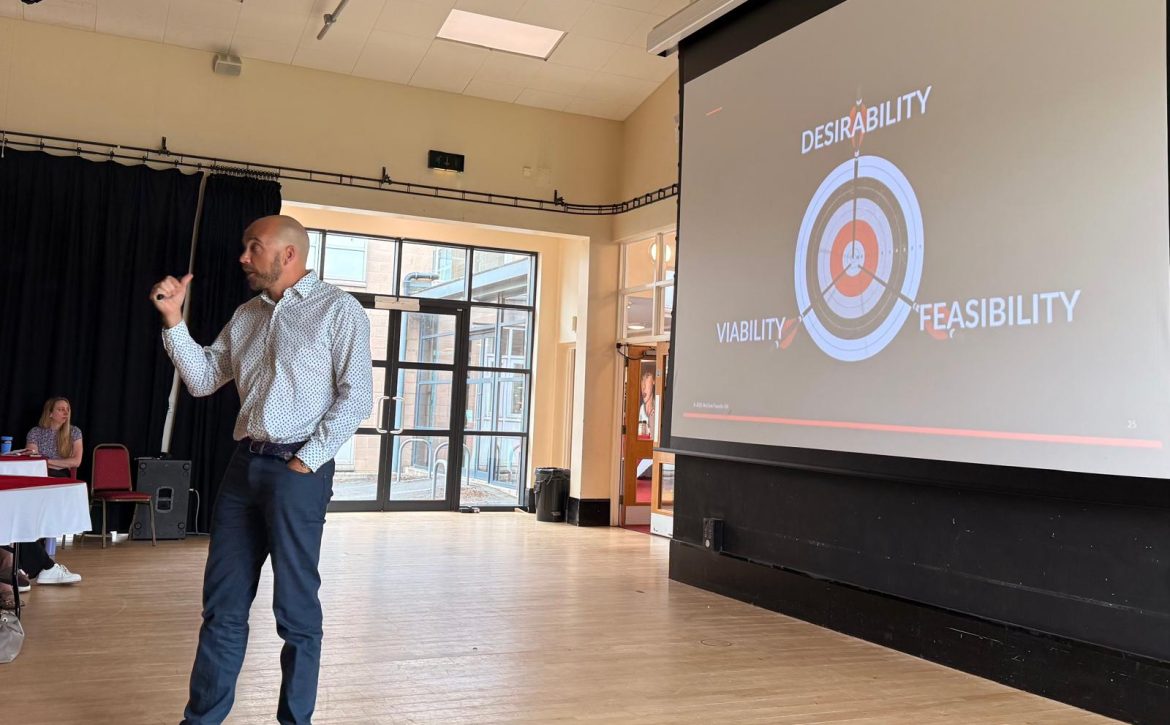
Mark was rightly sceptical of focus groups and “big launch” thinking. He reminded us that the only way to test desirability is to put something in front of people and see if they will actually use it. He used the framework of desirability, feasibility, and viability – a tool we should be applying more often in education technology projects.

This means:

  • Building minimum viable pilots instead of massive rollouts
  • Listening to real feedback from users – not just reports
  • Using data to guide iteration, not to punish deviation

We need to create a culture in education where testing small and failing safely is not just accepted, but expected.

Growth: From Pilot to Scale

Once something works, the next challenge is scaling it without breaking it. Mark’s story of Perfect Draft and the beer gifting platform mirrored the challenge we see in trusts: how do you scale a good idea from one school to many?

Here, governance matters. Advisory boards, communities of practice, digital leadership networks – these are the infrastructure we need to scale ideas responsibly. We have seen trusts grow AI practices from a single classroom to a trust-wide strategy by embedding support, professional development, and shared learning pathways.

If your digital project is stuck at pilot stage, ask yourself: who is helping you grow it?

Ecosystem: Innovation is a Team Sport

The final message was perhaps the most important. Innovation is never a solo effort. Mark reminded us that building an innovation ecosystem involves talent, knowledge, funding and most of all, community. He spoke of partnering across geography and sector, assembling diverse skills and creating the conditions where ideas can thrive.

In education, this is critical. No single trust can solve the sector’s challenges alone. We need federated learning, shared platforms, and transparent knowledge exchange. We need partnerships with EdTech firms, universities, local authorities, and yes, with each other.

At TransforMATive, we are building these ecosystems every day – across MATs, with AI policy developers, with software providers and frontline educators – all with one aim: better outcomes for children.

Conclusion: Forge a Path Forward

Mark summarised his approach using the acronym FORGE: Focus, Originality, Results, Growth, Ecosystem. It is a model worth borrowing.

In a time of tight budgets, rising need and accelerated change, we do not just need innovation. We need intentional, inclusive, and strategic innovation.

We need digital leadership that is not afraid to test, fail, listen and grow.

We need operational structures that deliver stability, and cultural mindsets that invite disruption.

And above all, we need to remember that technology is only ever a means to an end. That end must be a better, fairer, more empowering education system for all.

Inclusion, Technology and the Moral Purpose of Digital Leadership

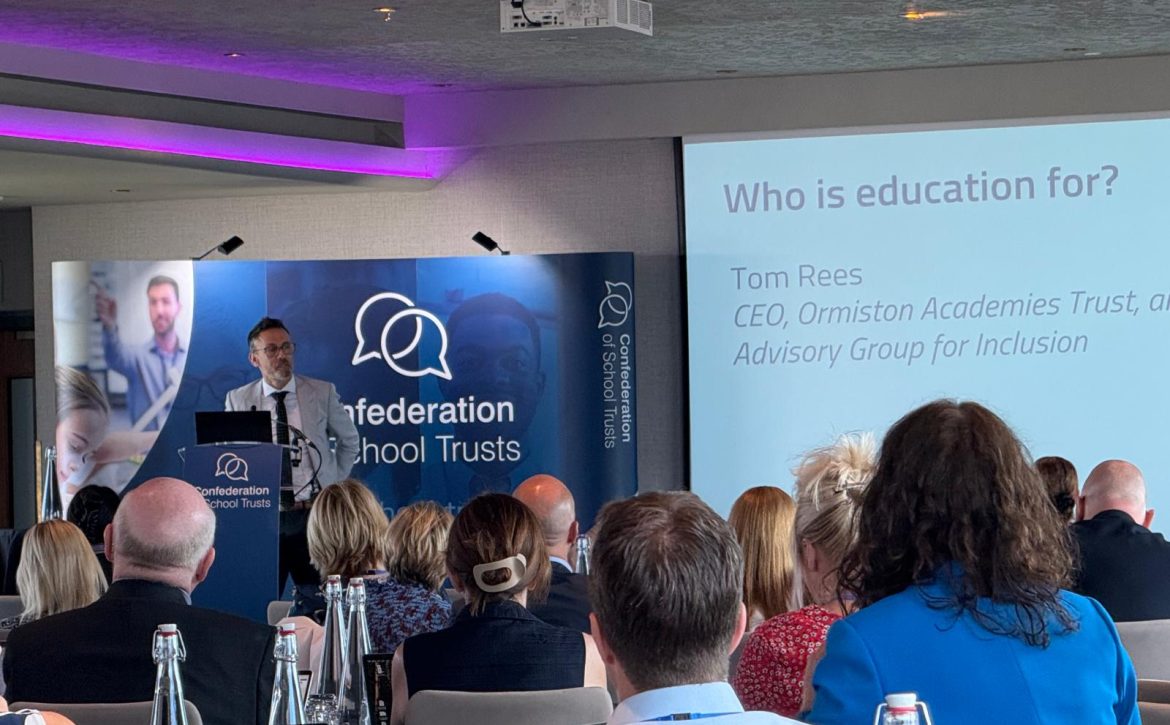
Listening to Tom Rees speak is always grounding. His keynote this week was no exception. At its core, it was a call to re-engage with the moral foundations of our education system. A reminder that, despite all our complexity and systems and metrics, we are here for one reason: to give every child the opportunity to live a full, enriched life.

Tom’s message, centred around the lived reality of children with special educational needs and disabilities (SEND), was deeply human and fundamentally civic. As someone immersed in digital strategy, I came away with a simple question: are our technologies serving inclusion, or unintentionally reinforcing exclusion?

Technology with a Moral Purpose

Tom’s speech took us from the East End of 1920s London to the current state of our SEND system. He reminded us of the post-war promise of the welfare state – a promise of education, healthcare and social care for all. But he also laid bare the gaps that still persist, particularly for children with additional needs.

In our world of digital transformation, we must ensure our work upholds that promise. Whether we are rolling out a new MIS, implementing an AI-powered assessment tool, or embedding analytics into the classroom, we must ask: who is this for? Who benefits? And most importantly, who might be left behind?

Technology must be a bridge, not a barrier.

Rejecting the Binary: There Are Only Children

One of the most powerful statements Tom made was this: “There are no ‘SEND children’ and ‘other children’. There are only children.” This simple truth speaks volumes. It challenges the structures and silos that we, sometimes inadvertently, replicate in our systems.

Digital strategy is no exception. All too often, accessibility is seen as a bolt-on, inclusion as someone else’s job, or data on SEND pupils as an afterthought. But real digital leadership understands that inclusion must be baked in from the beginning – in user design, in training, in procurement decisions and in the data we prioritise.

We must stop designing systems for the average child. We must start designing for every child.

SEND and the Evidence Gap in EdTech

Tom challenged us to admit that SEND has not benefitted from the same rigorous, evidence-informed reform as curriculum or assessment. I would argue the same applies to EdTech. While the sector has raced ahead in AI, automation and analytics, we have not yet held our innovations to the standard SEND learners deserve.

We see too many tools that lack adaptive features. Too many platforms that do not interface with assistive technology. Too much inconsistent advice around digital inclusion. And too few partnerships between trusts, tech providers and SEND professionals to co-design what good looks like.

At TransforMATive, we are committed to closing this gap. Whether supporting trusts with AI strategy, procurement, or platform development, we work to ensure that inclusion is not a compliance exercise, but a core design principle.

From Diagnosis to Design: Data That Works for Everyone

Tom also spoke about the “labelling industry” – how we have become too quick to classify children, often inconsistently, and with labels that follow them for life. This made me reflect on our use of data in digital systems.

Are we using data to liberate or to limit? Are we designing dashboards that flag “SEND status” as a risk indicator, or as a signpost for tailored support and strength-based insight?

Digital leaders have a responsibility to reshape how we see and serve our children through data. This includes:

  • Developing strength-based data models
  • Prioritising accessible and inclusive analytics
  • Building systems that reflect potential, not just problems
  • Ensuring that SEND and inclusion leads are involved in every tech procurement decision

A Broader, Richer Vision of Education

Tom’s three purposes of education – to educate, to enrich, and to empower – could form the foundation of a digital vision for any trust. These are not just abstract aims. They offer a framework for how we should be using digital tools:

  • Educate: Technology must support high-quality teaching and deep learning, not replace it.
  • Enrich: Platforms must create opportunities for creativity, connection and joy.
  • Empower: Systems must increase voice, agency and belonging, particularly for those who have been underserved.

This is why inclusive digital transformation matters. It is not just about infrastructure. It is about justice.

Conclusion: Holding the Promise

Tom’s grandmother, Connie, lived through two world wars and still carried with her a belief in building a better world for the next generation. Her life, and the values it embodied, were woven through his keynote as a living metaphor for what our education system can – and should – be.

Digital leadership must carry that same promise. Not just to make things faster or smarter, but fairer and more human. To use our tools not simply to diagnose deficits, but to design dignity. To make the system work for every child, especially those it has failed in the past.

That is the promise we must hold. And we must hold it together.

Unlocking Digital Leadership for the Future of Education

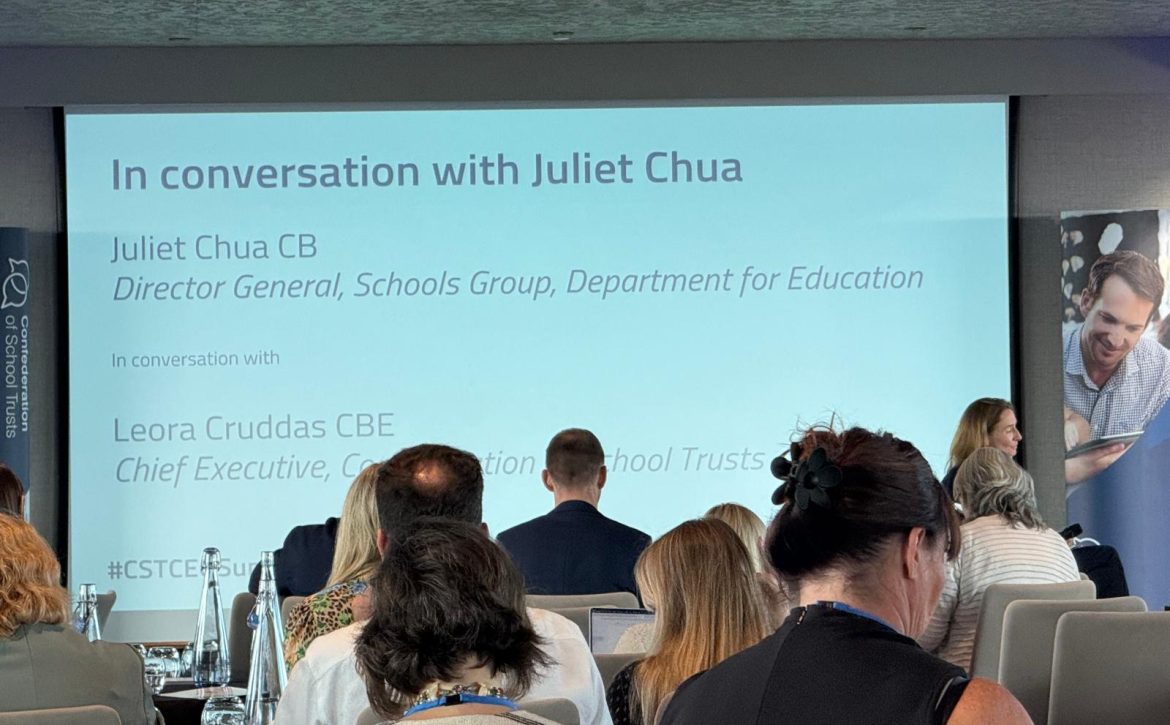
Hearing the Director General speak so candidly and compellingly about mission, governance, and system reform was a refreshing reminder of the responsibility and opportunity we hold as leaders in education. While the themes centred around structural reform, equity, and public service transformation, I found myself reflecting on how closely this vision aligns with the role of digital strategy and AI in shaping the future of our schools.

At the heart of the discussion was a call to break down silos and create a more integrated, ambitious system, rooted in place and purpose. For those of us supporting trusts with digital transformation, this is more than familiar. It is foundational.

A Mission-Led Approach to Digital Strategy

The Director General spoke of the “simple but powerful idea” of galvanising the system around big, bold goals – like breaking the link between childhood disadvantage and future life chances. This is not just policy. This is mission.

In digital terms, this means stepping beyond reactive, piecemeal initiatives and investing in technology that supports long-term outcomes. A true mission-led digital strategy should:

  • Build equitable access to tools, data, and insights
  • Prioritise early intervention through intelligent systems
  • Enable joined-up working across education, health and care
  • Support every child and family to thrive, not just achieve

Technology must serve the mission, not the other way around.

The End of Silos, the Rise of Systems Thinking

One frustration expressed in the keynote was the “battleground of silos” that inhibit effective collaboration. This could not be more relevant to digital transformation. Many trusts today operate with fragmented platforms, duplicated data, and disjointed communication tools.

The opportunity – and the obligation – is to build integrated digital ecosystems that reduce duplication, support intelligent workflow, and unlock collective insight. This means interoperable systems, transparent governance, and a shared language for improvement.

We have to think less about IT departments, and more about digital culture.

The Relational State and the Human Layer of Technology

A powerful thread in the speech focused on the idea of the “relational state” – a reimagining of public service that is built on human connection rather than transactional bureaucracy. This is a profound challenge for digital leaders.

In education, AI and automation are rapidly reshaping how we assess, plan, and even teach. But if we lose sight of the relationships at the heart of learning, we risk replacing wisdom with efficiency.

Relational digital leadership means:

  • Designing systems that support, not surveil
  • Using AI to augment, not replace human judgement
  • Embedding digital tools within the values and vision of the trust
  • Building capacity and confidence in staff, not just compliance in process

This is not about replacing pastoral care with predictive analytics. It is about giving staff the time and tools to build deeper, more effective relationships.

Joining the ‘Team Sport’ of Reform

One phrase stood out: “Join the team sport of delivery.” That could just as easily be said about digital change. Transformation does not happen in isolation. It requires open dialogue with policymakers, collaboration with partners, and meaningful engagement with those on the ground.

At TransforMATive, we have seen this in practice – whether through co-developing AI strategies with MAT leaders, aligning MIS and HRIS procurement with values, or bringing trusts together to share digital governance practices.

When the Director General encouraged us to “challenge thinking” and “build out what works,” I was reminded that digital maturity is not just about capability. It is about confidence. It is about trust.

From Optimism to Action

In closing, the conversation turned philosophical. How do we replace the pessimism of policy with the optimism of purpose? It is a beautiful question, and one that applies directly to digital leadership.

Too often, digital strategy is seen as a reaction to risk or a box-ticking exercise. But what if we viewed it instead as a vehicle for optimism? A tool to widen opportunity, elevate voice, and build better futures?

If we can harness our digital capacity in service of our mission, we move from technology as a cost to technology as a catalyst.

Final Thoughts: What Kind of System Are We Building?

The speech ended with a reminder that our system, though not perfect, is respected globally. We have much to be proud of. But pride should never become complacency.

As we await the next white paper, AI policy, and accountability reforms, now is the time to shape what comes next. Our decisions today will define the tools, systems and culture of the next generation of schools.

Let us ensure those choices reflect not just what we can do, but what we should do.

Redefining Digital Leadership through Civic Connection and Collective Action

Listening to this week’s panel discussion between Moira, Jim and colleagues, I found myself deeply encouraged by the clarity, honesty and courage shown in their reflections on trust leadership. Their stories, shaped by inflection points like the pandemic, painted a picture of a sector that is beginning to embrace its civic responsibility in a much broader, bolder way.

As someone focused on digital transformation and AI in education, I was struck by how closely their narratives align with our own journey. At TransforMATive, we talk a lot about systems, strategy and infrastructure. But behind every tool and dashboard is a community. And what this panel reminded me is that digital leadership is civic leadership.

From Isolation to Interconnection

What stood out most was the deliberate shift from internal priorities to outward-facing purpose. Whether it was dealing with reputational challenges, expanding across regions, or responding to poverty and attendance issues, every trust leader on that stage acknowledged that the turning point came when they stopped doing to communities and started working with them.

This applies directly to how we think about digital strategy. A central server may connect your schools, but what connects your communities? Are your systems designed only to solve problems inside the school gate, or to enable collaboration and support beyond it?

The most successful digital strategies I have seen are those that start with empathy. Just as the trusts in this panel listened to parents, residents and young people, our digital leaders must listen to users. Staff. Pupils. Families. Technology must not widen the gap between institutions and people. It must close it.

AI: A Tool for Upstream Thinking

Jim’s reflections on tackling attendance through employment support rather than punitive measures spoke volumes. It reminded me of the concept of upstream thinking in digital transformation. Too often, schools are reacting to data, rather than designing systems that prevent the problem in the first place.

AI gives us a powerful opportunity to intervene earlier, smarter and more humanely. From predictive analytics around attendance, to early identification of safeguarding patterns, to AI-driven personalisation of learning support, we now have the tools to shift from firefighting to foresight.

But this requires a reimagining of leadership. As Moira said, we cannot simply run brilliant schools in isolation. We must create the conditions for excellence by connecting people, understanding contexts and using data to empower rather than punish.

Trust, Transparency and Technology

A running theme throughout the panel was the rebuilding of trust. Several leaders shared how their communities had, at one point, felt disconnected or misunderstood. The repair came through listening, transparency and place-based action.

In the digital world, this could not be more relevant. If we are not transparent about what AI is doing, if we cannot explain why certain tools are used, or if parents do not feel their children’s data is being protected, we will lose public trust quickly.

Digital leadership, therefore, is not just about performance. It is about permission. And the only way to earn permission is through open, inclusive dialogue and clear ethical governance.

From Central Office to Civic Square

What excites me most is how trusts are evolving. As the panel noted, we are no longer just providers of education. We are civic institutions, often the last remaining anchor in fragmented local systems. Whether it is food parcels, uniform grants, employment support or green space regeneration, our schools are becoming hubs of social renewal.

At TransforMATive, we are beginning to see the digital equivalent of this. Trusts are asking not just for IT strategies, but for digital blueprints that empower community voice, support civic partnerships and enable joined-up services across local areas.

We need digital systems that reflect local identities, not impose generic solutions. We need place-based platforms that can flex around the needs of different schools and regions. We need AI that learns from the community, not just about it.

Courage to Lead, Capacity to Act

The final message from the panel was about courage. About expanding the mandate of a trust and not waiting for permission to do the right thing. This struck a chord with me, because digital transformation also takes courage. It means challenging old models, confronting discomfort with new technologies and stepping into unfamiliar territory.

As we support trusts in building AI strategies, adopting new systems or overhauling infrastructure, we are constantly reminded that digital maturity is not just a matter of tech readiness. It is a matter of leadership. Of alignment. Of purpose.

Conclusion: A Call to Reimagine

To paraphrase a final reflection from the panel, if not us, who? If not now, when?

We stand at a pivotal moment for education. The question is no longer whether digital transformation will shape our future. It already is. The real question is whether we will shape it in service of our mission.

Let us lead with purpose. Let us design systems that listen, not dictate. Let us use AI not as a shortcut, but as a tool for understanding and justice.

And most of all, let us remember that behind every strategy is a child, a family, a teacher. If our digital systems do not serve them, they serve no one.

Civic Leadership in a Digital Age: Reflections on Purpose, People and the Power of AI

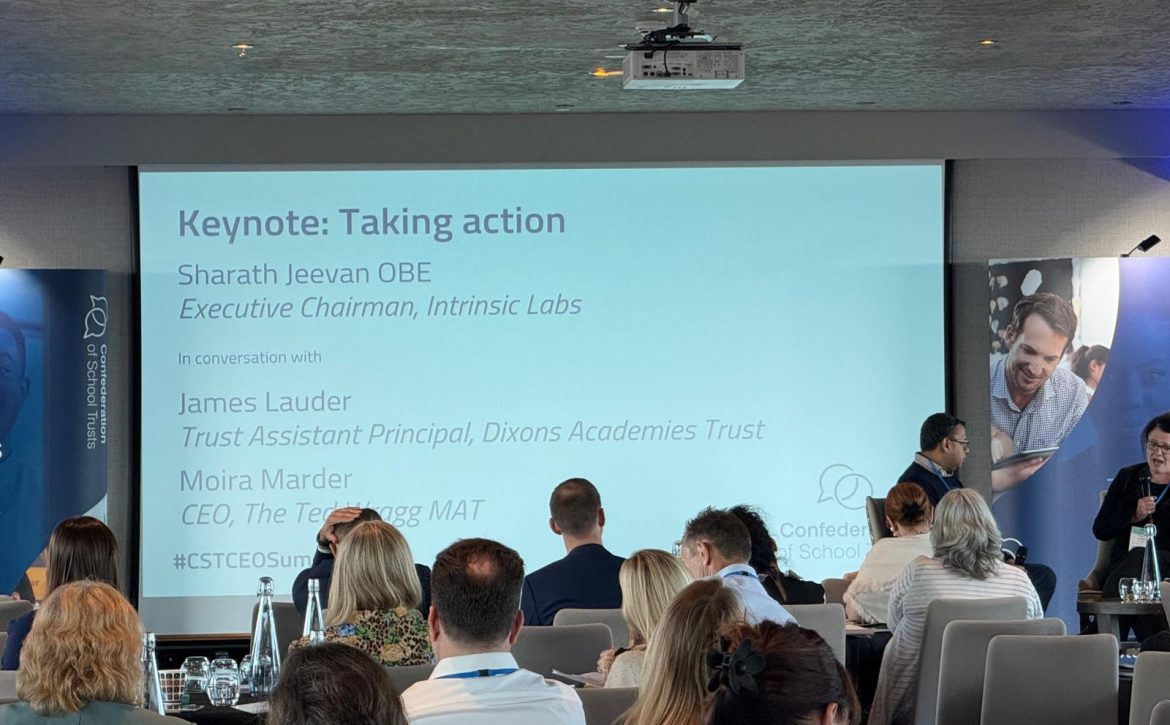
Last week, I had the privilege of listening to a powerful keynote from Leora Cruddas of CST. Her call to reimagine civic leadership not simply as collaboration between institutions, but as a deeper, more meaningful relationship with people and communities, could not have come at a more important time for those of us working in digital transformation within education.

As Leora pointed out, the challenges we face are too complex for individuals or single organisations to tackle in isolation. In today’s environment, which includes rising inequality, economic pressure and a fast-changing technological landscape, we need leadership that is rooted in purpose and grounded in community. Within education, that means reconsidering how we lead in a world increasingly shaped by artificial intelligence and digital systems.

Leadership That Centres People

Digital transformation is still too often seen as a technical project. It is measured in the number of devices, the speed of the internet connection or the efficiency of a helpdesk. But true transformation is about people. It is about how we live our values through the systems we design, and how we use digital infrastructure to serve our communities.

Leora reminded us that schools are microcosms of society. This could not be more true when we consider how technology is used. The systems we choose, the platforms we adopt, the tools we train staff to use, and the way we protect and use data all shape the experience and opportunity of pupils and staff alike. Digital leadership is not a technical function. It is a moral one.

Accountability and Trust in a Digital World

A core theme of Leora’s address was the need to rethink accountability. She acknowledged that the government has a legitimate role in setting the accountability framework, particularly given the level of public investment in education. However, she challenged us to go further.

We need to see accountability not as something done to us, but something we own. We must move beyond what is externally imposed and take responsibility for being transparent and intentional about what we value and how we measure success.

This is particularly true when it comes to digital strategy and AI. Are we using data to evidence compliance, or to improve the lived experience of children and families? Are we chasing metrics that are easy to capture, or investing in systems that reflect our values? Trusts must be clear about their vision for digital and their expectations for how technology will support teaching, learning and organisational effectiveness.

Collaboration Through Autonomy and Interdependence

One of the most compelling ideas in Leora’s speech was the balance between autonomy and interdependence. School trusts have significant freedom, but working in isolation can limit impact. In a connected digital world, the best outcomes come when we work together.

This is something we see clearly through our work at TransforMATive. Whether it is co-designing digital strategies, facilitating shared procurement, or building trust-wide AI policies, collaboration multiplies the impact of individual effort. Internal ownership, supported by sector-wide cooperation, creates a climate where innovation can thrive.

AI as a Leadership Test

Leora introduced a speaker known for helping leaders navigate “inflection points”. There is no doubt that AI represents such a moment. It is changing how we think about learning, teaching, administration and leadership itself.

But speed must not come at the expense of reflection. The education sector must respond to AI with maturity and clarity. That means building governance around its use, upskilling staff, ensuring equitable access, and grounding every AI tool in a clear purpose.

At TransforMATive, we are supporting trusts to craft thoughtful, robust AI strategies. These are not just about tools or productivity. They are about inclusion, agency, trust, and impact. The launch of a national AI policy, combined with the work of pioneering schools and trusts, will shape the future of education in profound ways. We must ensure that digital leadership keeps pace with this change.

Final Reflections: Purpose, People and Platforms

Leora’s keynote returned again and again to the theme of purpose. It is a useful reminder. Digital change is not about systems alone. It is about who we are and what we stand for.

If we can bring the same values-led approach to digital strategy as we do to curriculum or safeguarding, then the future of education will be both digitally enabled and deeply human. Let us lead with purpose, measure what matters, and take this moment seriously.

We are building more than systems. We are building a better future.

Why Invest in Technology Now?

As we approach the end of the budget-setting period, many schools across the country are navigating challenging financial decisions. The recent announcement of a 4% pay rise for teachers, supported by £615 million in additional funding, is a commendable step towards valuing our educators Schools Week.

However, with schools expected to cover a portion of this increase through internal efficiencies, it’s clear that strategic investments are more crucial than ever.

Why Invest in Technology Now?

  • Enhance Quality: Implementing advanced educational tools can elevate teaching and learning experiences.
  • Manage Risk: Robust IT systems can protect against data breaches and ensure compliance with regulations.
  • Reduce Costs: Automation and digital solutions can streamline administrative tasks, leading to significant savings.
  • Generate Revenue: Online courses and virtual learning platforms can open new income streams.

At Transformative, we specialise in guiding educational institutions through digital transformations that align with their unique goals and challenges.

Ready to Future-Proof Your School?

Let’s discuss how we can support your institution in leveraging technology for sustainable growth and excellence.

#Education #SchoolBudget #EdTech #DigitalTransformation #TransformativeSolutions

People First: Celebrating 3 Years of TransforMATive with Strategy, Skills, and a Bit of ‘The Cube’

As TransforMATive celebrates its third birthday, we’re taking a moment to reflect on what really drives our impact: our people. From the very beginning, our mission has been rooted not only in supporting digital transformation across education and the public sector, but in building a company where people feel valued, supported, and empowered to grow.

At the heart of our success is a simple but powerful belief—people matter most.

Whether we’re shaping AI strategy for a Multi-Academy Trust or delivering digital leadership roundtables, our work is only possible because of the passion, insight, and commitment of our team. That’s why we continue to invest in a people-centred strategy that prioritises talent recruitment, development, and—most importantly—retention.

To mark our milestone, we wanted to do something memorable. So, we invited our team to step into a very different kind of challenge: TransforMATive Takes on The Cube.

Why The Cube? Because, in many ways, it mirrors what we value as a business.

Success in The Cube isn’t just about individual ability—it’s about strategy, adaptability, teamwork, resilience, and yes, a bit of healthy competition. These are the same qualities that underpin our approach to transformation projects and client relationships. It was a chance to laugh, to connect, to support each other under pressure—and to reflect on how we apply those same principles every day in our work.

This experience reminded us that no strategy is effective without the right people to bring it to life. That’s why we’re focused on:

Attracting exceptional talent who share our values and ambition.

Fostering a culture of trust, collaboration, and continuous learning.

Creating space for wellbeing, creativity, and fun—because great work happens when people feel great.

As we enter our fourth year, we’re more committed than ever to making TransforMATive not just a place to work, but a place to thrive.

To everyone who has been part of this journey—thank you. Let’s keep building something brilliant, together.