

Leadership
By Jonny Wathen, CEO, TransforMATive
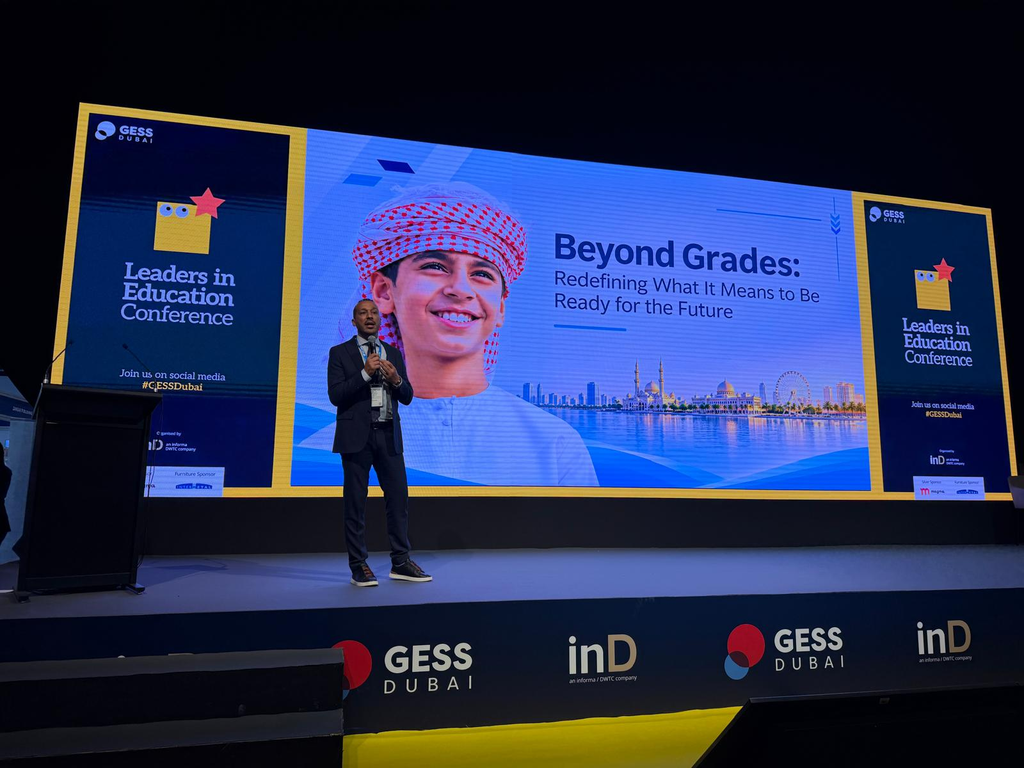
[Dr Ahmed Shaban, Sharjah Private Education Authority (SPEA), GESS – Dubai 2026]
One of the most thought-provoking questions I have heard recently in education is a deceptively simple one: what does success look like for a young person several years after they leave school?
It immediately takes us beyond examination results, qualifications and many of the measures that traditionally dominate our education systems. Academic attainment matters and always will, but is it enough?
If our ambition is to prepare young people not simply to succeed in school, but to thrive in an uncertain and rapidly changing world, then perhaps we need to think more deeply about what we actually mean by educational success.
That was one of my strongest reflections from a recent keynote exploring how education systems might move beyond a narrow focus on attainment towards a broader understanding of the knowledge, skills, competencies and values young people need for the future.
From what young people know to what they can do
Education has traditionally been very good at measuring knowledge. We can assess whether a student understands mathematics, science, history or language. We can test recall, comprehension and subject knowledge with increasing levels of sophistication.
But knowledge is only one part of the picture.
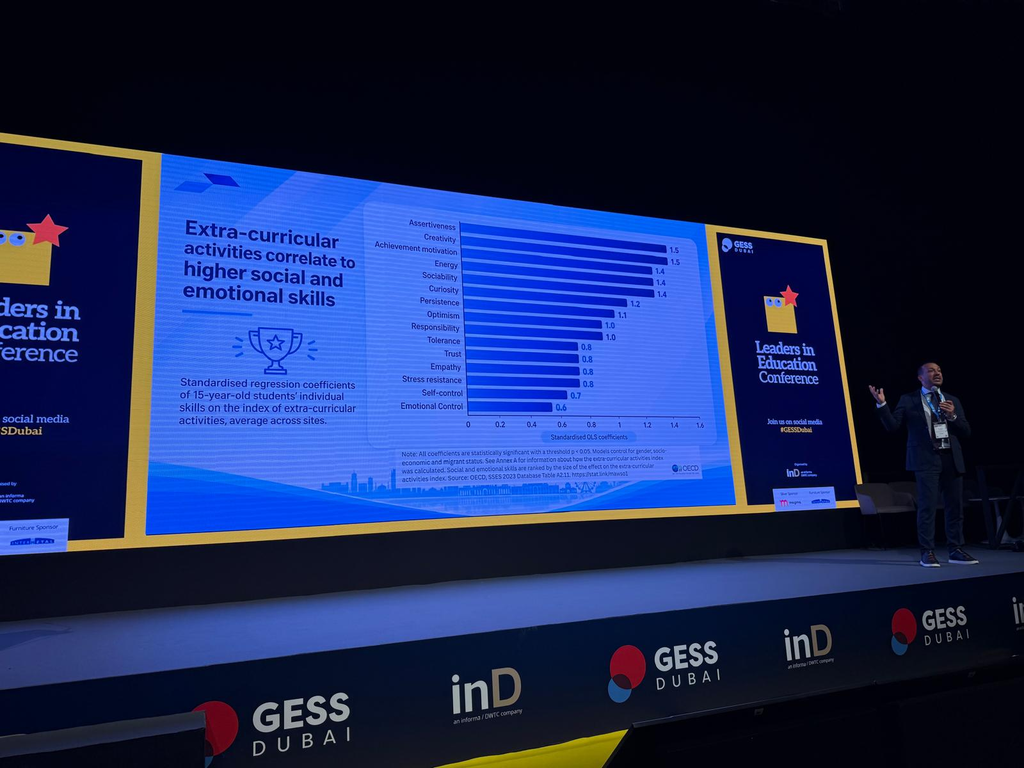
Young people also need to be able to apply what they know. They need to think critically, communicate effectively, solve problems, navigate uncertainty, work with people who may have very different experiences and perspectives, and make responsible decisions.
The difference between knowing something and being able to use that knowledge effectively is increasingly important and being able to apply that knowledge meaningfully is increasingly significant.
Understanding leadership, for example, is very different from demonstrating responsible leadership. Knowing the principles of communication is different from listening carefully, adapting to an audience and expressing an idea clearly.
Education therefore has a responsibility not only to develop knowledge, but also to create opportunities for young people to practise, demonstrate and refine these wider capabilities. The keynote made this distinction particularly clearly.
Values matter too
There is another dimension that is sometimes harder to articulate, which is values.
Education does not take place in a cultural or moral vacuum. Every school, trust and education system makes choices about what it considers important, whether that is responsibility, respect, tolerance, integrity, service, curiosity, compassion or ambition.
Different communities will express these values in different ways, and context matters. But if our educational mission includes developing young people who can contribute positively to their communities and wider society, then values cannot simply sit within a mission statement.
They need to be visible in the lived experience of education.
That means leaders need to think carefully about the relationship between curriculum, culture, pedagogy and the behaviours we model as adults.
The challenge is not writing the framework
Many organisations already have versions of this thinking. Graduate profiles, learner attributes, character frameworks, trust values and personal development strategies can all be valuable.
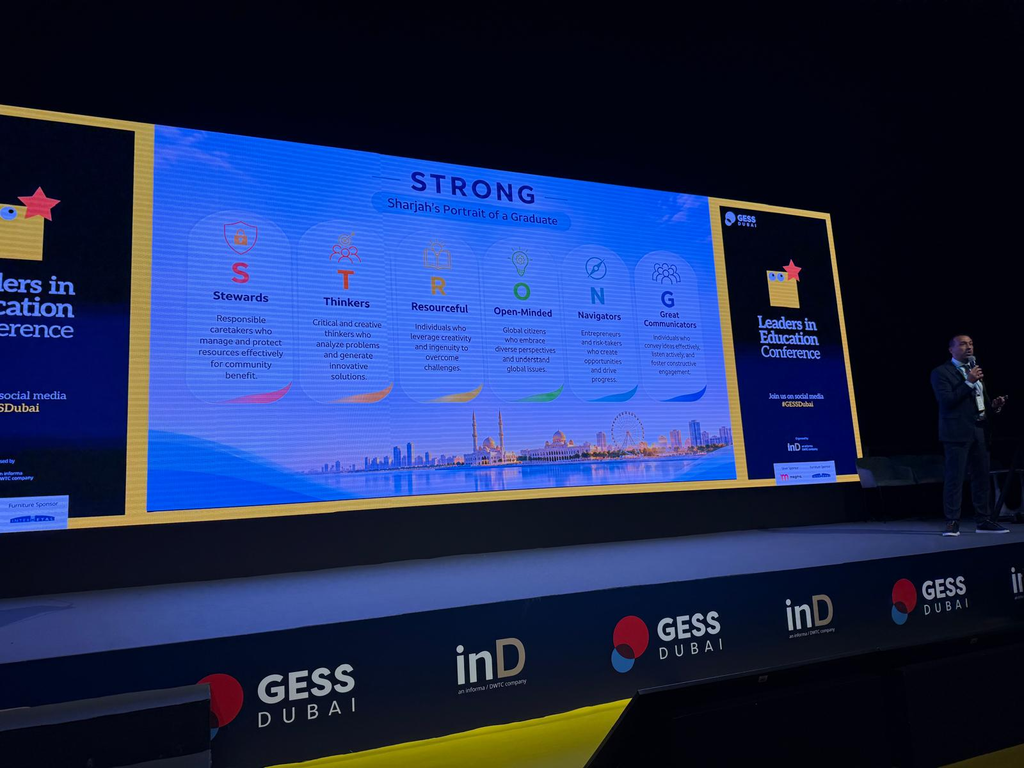
But writing the framework is the easy part.
The much harder question is what actually changes because it exists.
If we say that critical thinking matters, where are students given meaningful opportunities to practise it? If we value communication, where do students learn to listen, challenge constructively and express ideas confidently? If adaptability matters, how do we create opportunities for students to experience uncertainty and solve unfamiliar problems? If responsibility matters, where are young people trusted with genuine responsibility?
This is where strategy becomes pedagogy.
Embedding broader competencies requires professional learning, curriculum thinking, experiential opportunities and a willingness to reconsider the role of both teacher and learner.
Dr Ahmed Shaban’s keynote was particularly clear that meaningful change requires alignment between educational ambition, teaching practice, professional development and assessment.
Measuring what we value
Perhaps the idea that stayed with me most was this: are we measuring what we truly value, or are we simply valuing what we already know how to measure?
It is an uncomfortable but important question.
Education systems naturally focus on measurable outcomes. That is understandable. Leaders, boards, governments and communities need evidence that education is effective.
But measurement shapes behaviour.
What we measure influences what receives attention. What receives attention influences where time and resources are invested. Over time, those measures can begin to define what an organisation believes success actually means.
That is why assessment and accountability matter so much.
If we claim that creativity, communication, resilience, character or critical thinking are important, but never meaningfully seek evidence of their development, then we risk creating a disconnect between our stated mission and our operational priorities.
The challenge is not to create another set of simplistic scores or another dashboard. Complex human capabilities should not automatically be reduced to metrics.
Instead, perhaps the opportunity is to think more intelligently about evidence. What can students demonstrate? What can teachers observe? What might projects, portfolios, reflection, performance, participation and experience tell us? How might technology help us identify patterns without replacing professional judgement?
Just as importantly, how can we do this without creating another layer of unnecessary workload?
The keynote made an important distinction between collecting data for accountability and collecting evidence that can genuinely support educational improvement.
The opportunity for data and AI
This has significant implications for digital strategy.
For many education organisations, data maturity has historically meant becoming better at reporting attainment, attendance, behaviour, finance and operational performance. Those datasets remain essential, but perhaps the next stage is to ask whether our understanding of learners can become richer.
Could data help us identify emerging needs earlier? Could technology give students greater ownership of their learning? Could artificial intelligence help teachers see patterns that might otherwise remain hidden? Could we develop more personalised support based on a broader understanding of the learner?
Potentially.
But there is an important principle here.
Technology should serve the educational ambition, not define it.
That becomes increasingly important as AI capabilities continue to develop. The question should not simply be what the technology can do, but what problem we are trying to solve and whether using technology genuinely improves the experience or outcome for the learner.
A challenge for England
There is an obvious tension for education leaders in England.
Many schools and trusts already articulate ambitions that extend well beyond academic attainment. They talk about character, citizenship, personal development, employability, inclusion, leadership and preparing young people for life.
Yet the external accountability environment remains heavily influenced by a relatively narrow set of measures.
That does not mean leaders should ignore those measures. Academic outcomes matter enormously, particularly because strong educational outcomes remain closely connected to future opportunity.
But perhaps the challenge is to resist allowing externally measured outcomes to become the entirety of our internal definition of success.
Schools, trusts and governing boards have an opportunity to ask a much broader question: what does an educated young person look like when they leave us?
And then, perhaps more importantly, how would we know whether we had achieved that?
That feels like a genuinely strategic conversation.
A global question
The same challenge exists internationally.
There is increasing interest across education systems in competencies, learner profiles, future skills and broader definitions of success. But there is unlikely to be one universal answer.
Education is deeply connected to culture, community and national identity. A successful approach therefore cannot simply be copied from one education system into another.
What we can share are the questions.
What capabilities will young people need? Which values matter within our communities? How should pedagogy evolve? What evidence would help us understand learner development? What role should technology play? How do we maintain academic rigour while broadening our understanding of success?
International collaboration becomes particularly powerful when it helps us challenge our own assumptions rather than simply importing someone else’s solutions.
Questions for education leaders
As I reflected on the keynote, there were a number of questions I found myself coming back to.
If we met our students several years after they left us, what would make us believe their education had been successful?
Does our current definition of success reflect our stated educational mission?
Are we developing transferable capabilities as intentionally as we develop subject knowledge?
Where do students have opportunities to apply what they know in authentic situations?
Are our values evident in everyday educational practice, or primarily in our communications?
What are we measuring simply because it is easy to measure?
What important things do we value but currently struggle to evidence?
And how could data, technology and AI help us understand learners more holistically without reducing them to metrics?
These are not easy questions, but they are increasingly important ones.
Beyond grades
Academic success should never become unimportant.
The challenge is not to replace attainment, but to broaden the definition of educational success around it.
Education should develop knowledge, but it should also develop judgement, confidence, curiosity, responsibility, adaptability, communication and the ability to think independently.
Perhaps most importantly, it should help young people develop the confidence and capability to navigate a world that none of us can predict with certainty.
For education leaders, the challenge is therefore not deciding whether these things matter. Most of us already believe they do.
The real challenge is ensuring that our curriculum, teaching, assessment, data, technology and leadership decisions genuinely reflect that belief.
Because perhaps the most important question is still the simplest:
Are we measuring what we value, or have we gradually learned to value what we measure?